
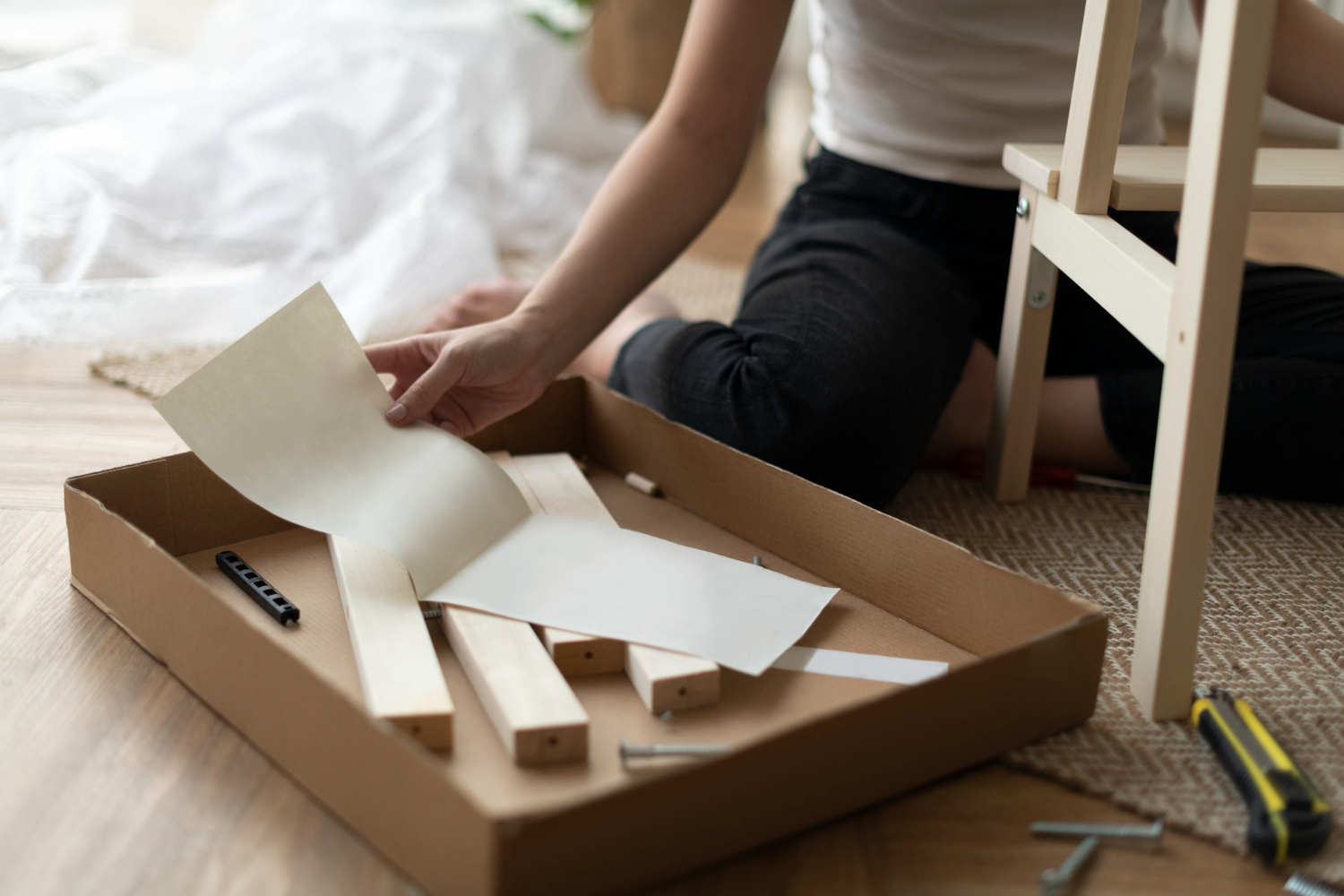
Furniture assembly usually goes wrong in predictable ways. It’s rarely about “bad instructions”—it’s small oversights that compound into wobbly frames, misaligned drawers, or parts that don’t quite fit anymore.
Most of these mistakes are easy to avoid once you know where people slip up.
Skipping the Instructions (or Skimming Them)
It’s tempting to jump straight in, especially with simple-looking pieces. That’s where things start going sideways.
What happens:
- Parts get installed in the wrong order
- Panels end up facing the wrong direction
- You have to backtrack after everything is partially built
How to avoid it:
- Read through the full instructions once before starting
- Pay attention to diagrams, not just text
- Identify similar-looking parts early
A five-minute review saves an hour of undoing work later.
Mixing Up Hardware
Most furniture kits include multiple screws that look almost identical—but aren’t.
What happens:
- Using the wrong screw length can damage panels
- Threads don’t grip properly
- Parts feel loose even when tightened
How to avoid it:
- Sort hardware before starting
- Keep each type separated
- Match pieces exactly to the diagram, not “close enough”
Small differences matter more than they look.
Tightening Everything Too Early
This is one of the most common mistakes—and one of the most frustrating to fix.
What happens:
- Parts don’t align correctly
- Holes don’t line up later in the build
- You end up forcing pieces together
How to avoid it:
- Tighten screws loosely at first
- Fully tighten only after everything is aligned
- Work in stages instead of locking each step immediately
Think of it like building a frame—alignment comes before final tightening.
Forcing Parts That Don’t Fit
If something isn’t fitting easily, there’s usually a reason.
What happens:
- Stripped screws
- Cracked panels
- Permanent misalignment
How to avoid it:
- Stop and double-check orientation
- Confirm you’re using the correct hardware
- Look for missed steps or hidden fasteners
Furniture is designed to go together with moderate effort—not force.
Ignoring Orientation (Front, Back, Left, Right)
Many parts look symmetrical but aren’t.
What happens:
- Pre-drilled holes end up on the wrong side
- Finished surfaces face inward
- Drawers or doors don’t align properly
How to avoid it:
- Check labels or markings on each piece
- Compare with diagrams before attaching
- Lay everything out in the correct orientation first
This is especially important for drawers, cabinets, and shelving units.
Using the Wrong Tools (or the Included Ones Only)
The small tools included in flat-pack furniture are functional—but not ideal.
What happens:
- Screws aren’t fully tightened
- Hardware strips or slips
- Assembly takes much longer than necessary
How to avoid it:
- Use a proper screwdriver instead of the tiny included one
- Consider a cordless screwdriver for larger builds
- Use a rubber mallet instead of a metal hammer for tight fits
Better tools don’t just save time—they improve build quality.
Skipping a Level Check
Furniture can look assembled—but still be uneven.
What happens:
- Wobbling tables or chairs
- Doors that don’t close properly
- Uneven weight distribution
How to avoid it:
- Check level during assembly, not just at the end
- Adjust positioning before tightening everything fully
- Use shims or adjust feet if needed
Fixing alignment early is much easier than after full assembly.
Losing or Misplacing Hardware
This usually happens midway through the process.
What happens:
- Missing screws delay completion
- Substituting incorrect hardware weakens the build
- Extra trips to find replacements
How to avoid it:
- Keep hardware in a tray or small containers
- Work in a clean, contained area
- Don’t open multiple bags at once
Organization matters more than people expect.
Assembling in the Wrong Space
Trying to build furniture in a tight or cluttered area creates problems.
What happens:
- Not enough room to maneuver parts
- Increased risk of scratching surfaces
- Difficulty flipping or repositioning pieces
How to avoid it:
- Assemble in an open area when possible
- Use a blanket or soft surface underneath
- Make sure you have space to rotate the piece
Give yourself room to work—it makes everything easier.
Not Anchoring When Required
Some furniture is designed to be secured to a wall, especially tall or narrow pieces.
What happens:
- Tipping risk (especially with children or uneven floors)
- Reduced long-term stability
How to avoid it:
- Follow anchoring instructions when provided
- Use proper wall anchors for your wall type
- Don’t skip this step for tall furniture like bookcases or dressers
This is about safety as much as durability.
Most assembly mistakes aren’t complicated—they’re small shortcuts that create bigger problems later.
- Read instructions fully
- Organize hardware before starting
- Don’t tighten too early
- Never force parts together
- Use better tools when possible
Furniture assembly is less about speed and more about sequence and accuracy. When those are right, everything fits the way it’s supposed to—and stays that way.