
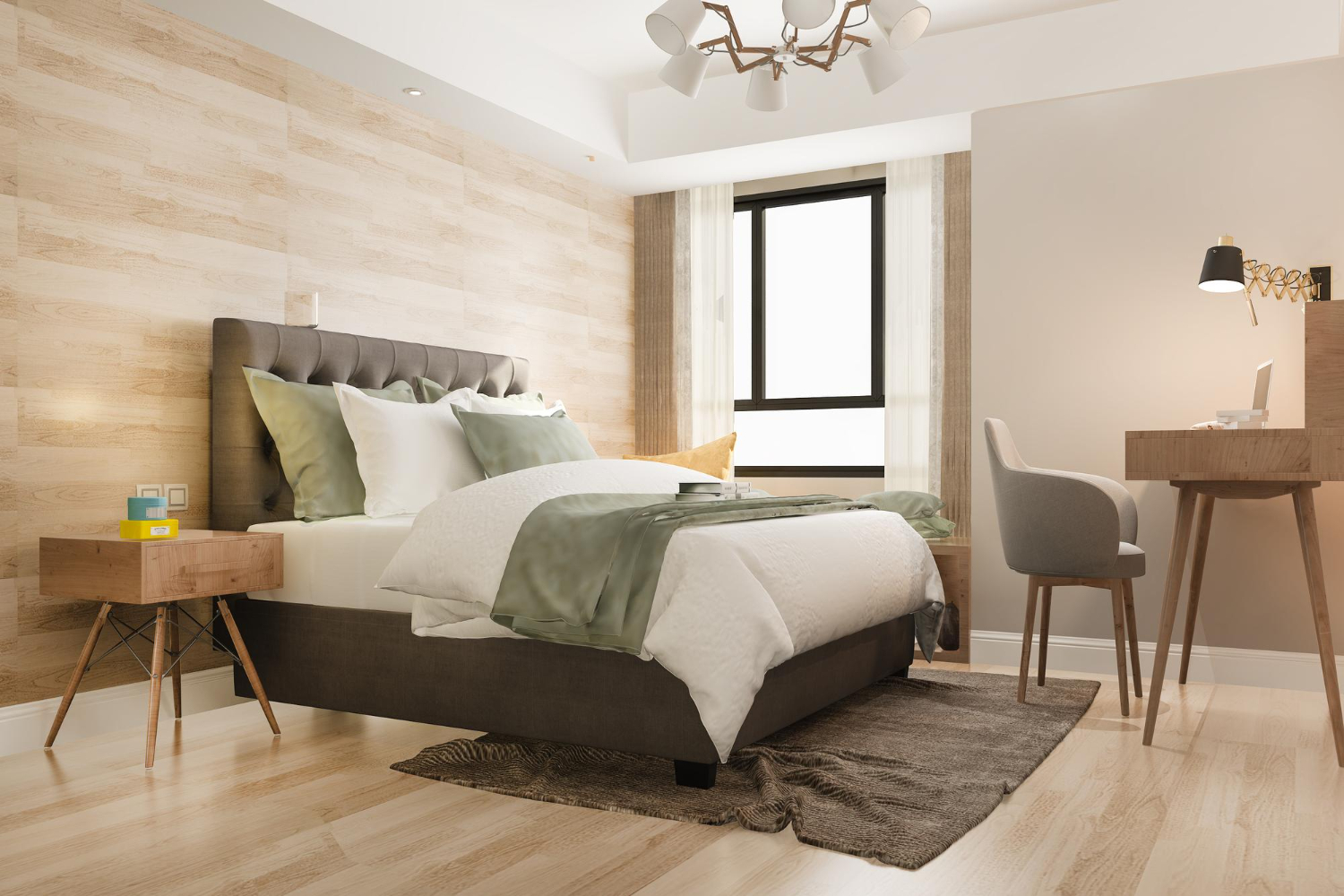
A comfortable bedroom isn’t about how much you buy—it’s about choosing a few high-impact essentials that actually improve how you sleep and use the space. If you focus on sleep quality, lighting, and basic functionality, you can create a comfortable setup without spending much.
Here’s what actually matters (and where to save vs spend).
Start With Sleep First (Don’t Cut Corners Here)
Your bed setup has the biggest impact on comfort.
- Mattress = most important
- Bedding = what you feel every night
If your mattress isn’t great, replacing it isn’t your only option. A simple mattress topper can significantly improve comfort at a much lower cost.
This is where most of your budget should go—everything else in the room matters less if your sleep is uncomfortable.
Use a Mattress Protector (Small Cost, Big Benefit)
A mattress protector is one of the easiest ways to extend the life of your bed.
- Protects against spills, sweat, and wear
- Helps maintain cleanliness
- Can preserve warranty coverage
It’s not exciting, but it prevents bigger expenses later.
Nightstands: Simple but Necessary
A bedroom without a nightstand quickly becomes inconvenient.
You need a place for:
- Phone
- Water
- Lamp
- Everyday items
This doesn’t need to be expensive. A small table, stool, or even a sturdy box can do the job just as well as a traditional nightstand.
Lighting: Cheap Upgrade, Huge Impact
Lighting affects how your room feels more than most furniture.
- Overhead lighting is often too harsh
- Soft, warm lighting makes the room feel more relaxing
- Bedside lighting is more practical for daily use
A basic table or floor lamp is enough to make a noticeable difference.
Storage: Keep the Room Usable
Clutter makes even a nice room feel uncomfortable.
At minimum, you need:
- A dresser, or
- Storage bins, or
- Under-bed storage
If space is tight, use vertical storage or under-bed space before buying more furniture. Keeping things organized has a bigger impact on comfort than adding more items.
Bedding: Where Comfort Is Felt Daily
This is the part you interact with every night.
Essentials:
- At least two sets of sheets
- Comfortable pillows
- A decent comforter or blanket
You don’t need luxury materials, but avoid the cheapest options—this is one area where a small upgrade makes a noticeable difference.
Curtains or Light Control (Often Overlooked)
Light exposure affects sleep more than people expect.
- Curtains improve privacy
- Blackout options help with better sleep
- They also make the room feel more finished
This is a low-cost upgrade with a real impact.
Optional Add-Ons (After the Basics)
Once the essentials are covered, you can add:
- Area rug (adds warmth)
- Mirror (practical and makes space feel larger)
- Minimal decor (plants, wall art)
These improve the look of the room, but they’re not necessary for comfort.
Simple Budget Priorities
If you’re working with limited money, focus in this order:
- Mattress or topper
- Bedding
- Lighting
- Storage
- Nightstand
Everything else can wait.
A comfortable bedroom comes down to a few smart choices:
- Invest in sleep quality first
- Add functional basics (nightstand, storage)
- Use lighting and bedding to improve comfort
Most people spend too much on appearance and not enough on how the room actually feels. If you focus on comfort first, even a low-budget bedroom can feel calm, functional, and easy to live in.