
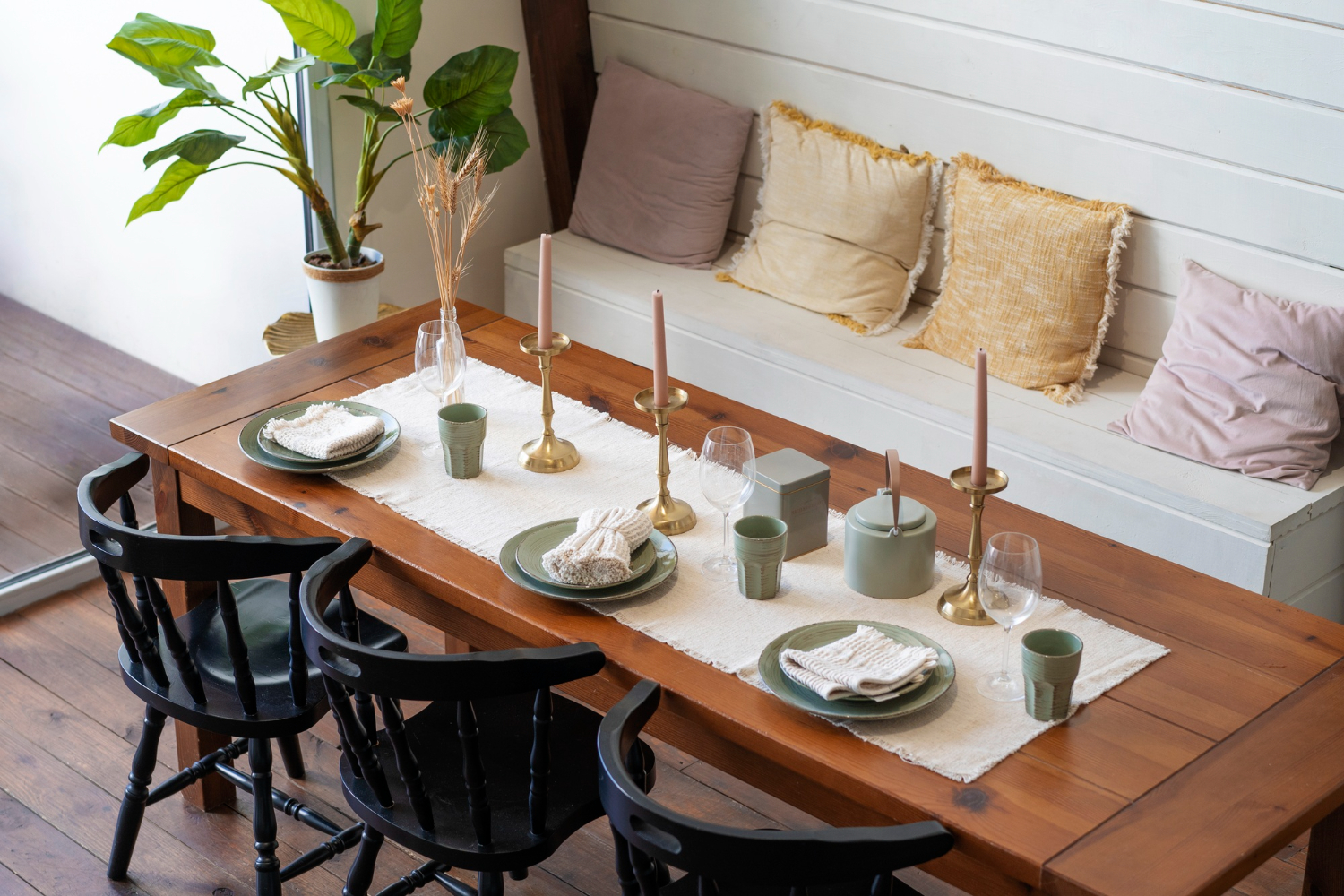
Tiny dining spaces force you to think differently. You can’t just drop a full-size table in the middle of the room and hope it works. That’s where expandable dining tables come in—they let you live small most of the time, without giving up the option to host when you want to.
And when you pick the right one, it doesn’t feel like a compromise—it feels intentional.
Why Expandable Tables Just Make Sense in Small Spaces
A standard table locks you into one size. Expandable tables don’t.
Most days, you keep things compact—just enough space for everyday meals. Then when you need more room, you expand it. That flexibility is exactly why they’re often the go-to choice for apartments and smaller homes. ()
But here’s the catch: they only work if your space can handle both versions. If the extended size blocks walkways or makes the room feel cramped, it defeats the purpose. ()
The Types That Actually Work in Tiny Spaces
Not all expandable tables are created equal. Some are way more practical than others when square footage is tight.
Drop-leaf tables
These are the classics for a reason. The sides fold down when you’re not using them, which keeps the footprint small. Lift them up when you need extra seating. Simple, effective, and great for tight layouts. ()
Butterfly leaf tables
These have a hidden leaf stored inside the table. You pull the table apart, flip the leaf open, and you’re done—no extra pieces to store. Ideal if you don’t have space for loose parts.
Gateleg tables
They use swinging legs to support fold-out sides. They’re especially good for narrow rooms, though you’ll want to pay attention to leg placement so it doesn’t interfere with seating.
Console-to-dining tables
Probably the most underrated option. These start as a slim console against the wall and expand into a full dining table when needed. Perfect for studio apartments or multipurpose rooms. ()
Size Matters More Than You Think
A lot of people focus on how big the table can get—but the everyday size matters more.
A compact table for two usually sits around 30–40 inches wide. Expand it, and you’re looking at 48–72 inches for four to six people. ()
The key is making sure you still have room to move around it. Ideally, you want about 36 inches of clearance so you’re not squeezing past chairs every time you walk by. ()
If that clearance disappears when the table is extended, it’s not the right fit—no matter how clever the design is.
Shape Can Make or Break the Space
Expandable is only part of the equation. Shape matters too.
- Round tables are great for tight areas because they improve flow and eliminate sharp corners.
- Rectangular tables work better in narrow rooms or against walls.
- Oval tables split the difference—more seating, but easier movement.
In small spaces, smoother edges and better flow often matter more than squeezing in an extra seat.
What Makes One Feel “Good” (Not Just Functional)
Some expandable tables feel like a workaround. Others feel like real furniture.
The difference usually comes down to:
- A solid, stable base (pedestal bases help with legroom) ()
- Smooth extension mechanisms that don’t jam or wobble
- Materials that can handle daily use (wood, quality veneer, or durable laminate) ()
If expanding it feels like a chore, you won’t use the feature. And then you’re just left with an awkward table.
A Small Reality Check
Expandable tables are great—but they’re not magic.
They won’t fix a layout that’s already too tight. They won’t replace good planning. And they won’t feel spacious if the room is already overloaded with furniture.
What they will do is give you flexibility—if you respect the limits of your space.
An expandable dining table isn’t about having more—it’s about having options.
Eat small when it’s just you. Open it up when people come over. Fold it back down when life goes back to normal.
That’s the kind of furniture that actually works in a tiny space—and keeps working long after the novelty wears off.