
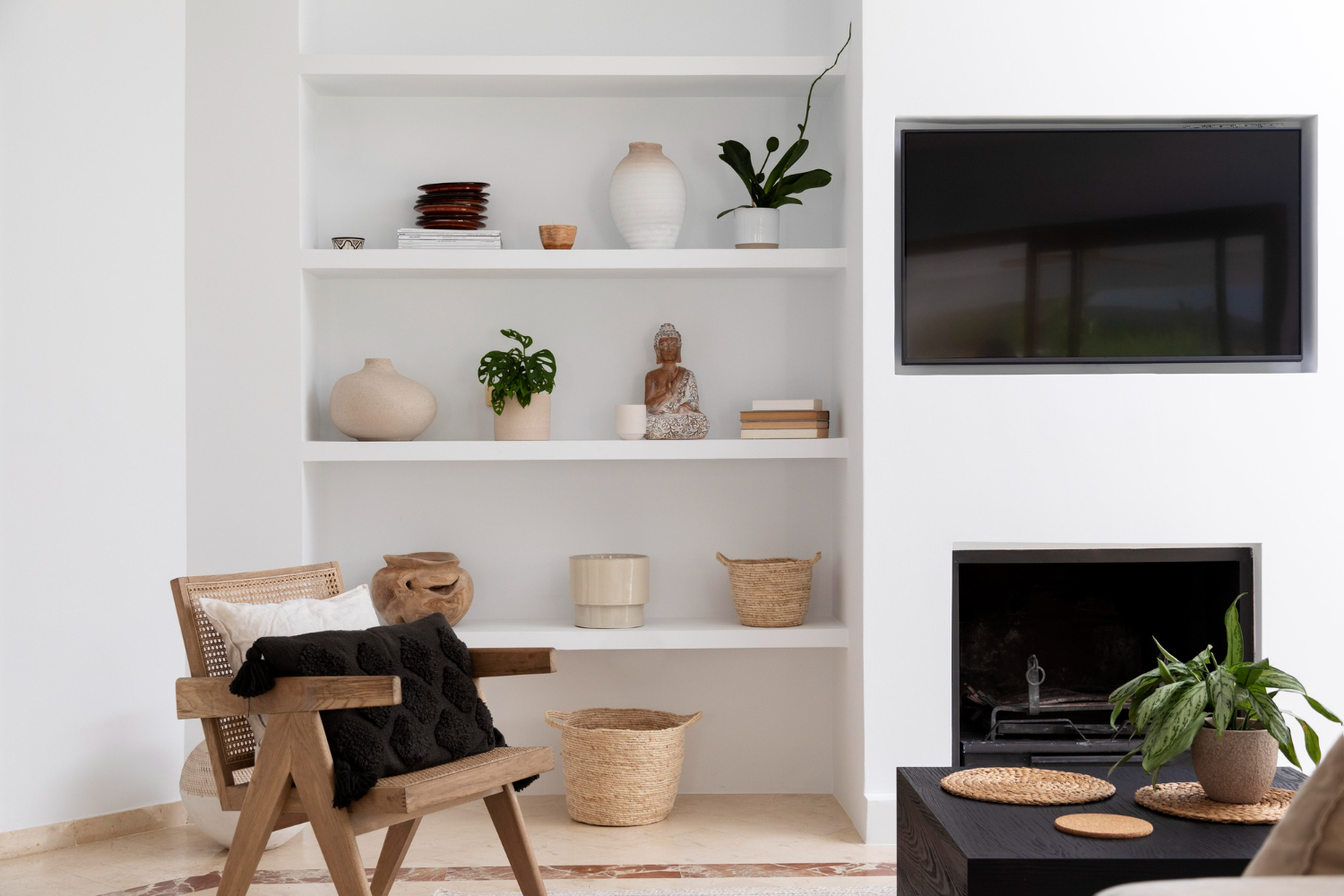
Wall-mounted furniture is one of the simplest ways to make a small space feel larger without actually changing its footprint. By lifting storage, desks, seating, and even beds off the floor, you create usable space underneath and reduce the sense of clutter that makes tight rooms feel even smaller.
It’s not just a design trick—it’s a functional shift in how a room works.
Wall-Mounted Desks That Disappear When You Don’t Need Them
A fold-down or floating desk is one of the most effective space-savers in small homes. It gives you a dedicated workspace when needed, then folds flat against the wall afterward, freeing up the room entirely.
Some versions include small shelves or compartments for office supplies, making them even more efficient in tight spaces.
This works especially well in bedrooms or studios where a permanent desk would otherwise dominate the layout.
Floating Shelves That Replace Bulky Cabinets
Wall-mounted shelves take advantage of vertical space that’s often ignored. Instead of bulky floor cabinets, shelves keep items visible, organized, and off the ground.
They’re commonly used for books, décor, kitchen items, or everyday essentials, helping rooms feel lighter and more open.
The visual effect matters as much as the storage—open wall space makes a room feel less crowded.
Wall Beds That Turn Bedrooms Into Multi-Use Rooms
A wall bed (often called a Murphy bed) folds directly into the wall or a cabinet, instantly freeing up floor space during the day.
This allows a single room to function as a bedroom at night and a living area, office, or workout space during the day.
It’s one of the most dramatic examples of how wall-mounted furniture changes how a space is used, not just how it looks.
Wall Cabinets That Free Up Floor Clutter
Wall-mounted cabinets are especially useful in bathrooms, kitchens, and entryways where floor space is limited and clutter builds quickly.
They keep everyday items hidden but accessible, while also improving the visual flow of the room. In small spaces, that combination of storage + openness makes a noticeable difference.
Why Floating Furniture Makes Rooms Feel Bigger
The main advantage of wall-mounted furniture isn’t just storage—it’s “negative space.”
When furniture doesn’t touch the floor, your eye reads the room as more open. That empty floor area underneath creates a sense of airiness, even if the total square footage hasn’t changed.
It’s a visual trick that has real functional benefits: easier cleaning, fewer obstacles, and more flexible layouts.
Where Wall-Mounted Furniture Works Best
This approach is especially effective in:
- Studio apartments where one room does everything
- Small bedrooms that need workspace + storage
- Entryways that get cluttered quickly
- Kitchens with limited cabinet space
In all of these, freeing up the floor changes how the space feels immediately.
A Few Practical Limits to Keep in Mind
Wall-mounted furniture isn’t always plug-and-play. It depends heavily on:
- Wall type and strength (drywall vs studs vs concrete)
- Proper installation hardware
- Weight limits for storage or seating
Skipping proper mounting is where most problems happen, not the design itself.
Wall-mounted furniture works because it changes the “ground rules” of a room.
Instead of everything competing for floor space, storage and function move upward, leaving the floor open for living.
When done well, the result isn’t just more space—it’s a room that feels easier to move through, easier to clean, and less visually crowded without actually getting bigger.