
Flea markets are one of those places where you can either feel overwhelmed—or leave wondering how you just upgraded your home for the price of takeout. The difference usually comes down to knowing what’s worth picking up and what’s just clutter in disguise.
The best finds aren’t necessarily the prettiest. They’re the ones with potential—the kind of pieces that look average on the table but quietly transform a room once you get them home.
Here’s what to actually keep an eye out for.
Solid Wood Furniture (The Quiet Winner)
If you see a scratched-up table, dresser, or chair that feels heavy and solid, don’t dismiss it too fast.
Older solid wood furniture is one of the best flea market finds because it can be refinished, painted, or left as-is for a more natural look. Unlike modern particleboard furniture, it tends to hold up over time instead of falling apart after a few moves.
Even rough-looking pieces can turn into statement furniture with minimal effort.
Mirrors That Add Instant Space
Mirrors are one of the easiest ways to make a room feel larger and brighter.
Flea markets often have unique or vintage frames you won’t find in stores. Even if the frame looks dated, a quick paint job or light restoration can turn it into a centerpiece.
They work especially well in small entryways, bedrooms, or narrow hallways where light is limited.
Lamps With Real Character
Lighting is one of the fastest ways to change a room’s mood, and flea markets are full of lamps that just need a little updating.
The key is focusing on the base, not the shade. Lamp shades are easy to replace, but sturdy bases—especially metal or ceramic ones—can last for years.
A simple new shade can completely modernize a dated lamp without spending much.
Baskets, Crates, and Storage Pieces
Storage doesn’t have to come from big-box stores.
Woven baskets, wooden crates, and old containers are everywhere at flea markets, and they’re perfect for organizing clutter in a way that still looks intentional.
They work in living rooms, bathrooms, kitchens—anywhere you need quick, flexible storage that doesn’t feel sterile.
Vintage Frames (Even Without the Art)
Don’t overlook empty frames.
Old frames often have better detailing and sturdier construction than modern budget versions. You can use them for photos, prints, or even fabric or wallpaper samples to create custom wall art.
A mismatched set of frames can actually look more interesting than a perfectly coordinated one.
Side Tables and Small Furniture Pieces
Small tables are one of the easiest upgrades you can bring home.
They’re versatile enough to use as nightstands, plant stands, or extra living room surfaces. At flea markets, they often cost far less than new versions—and many just need sanding or a fresh coat of paint.
If it’s slightly wobbly, that’s usually fixable. If the structure is solid, it’s worth considering.
Dishes and Kitchen Items (With Personality)
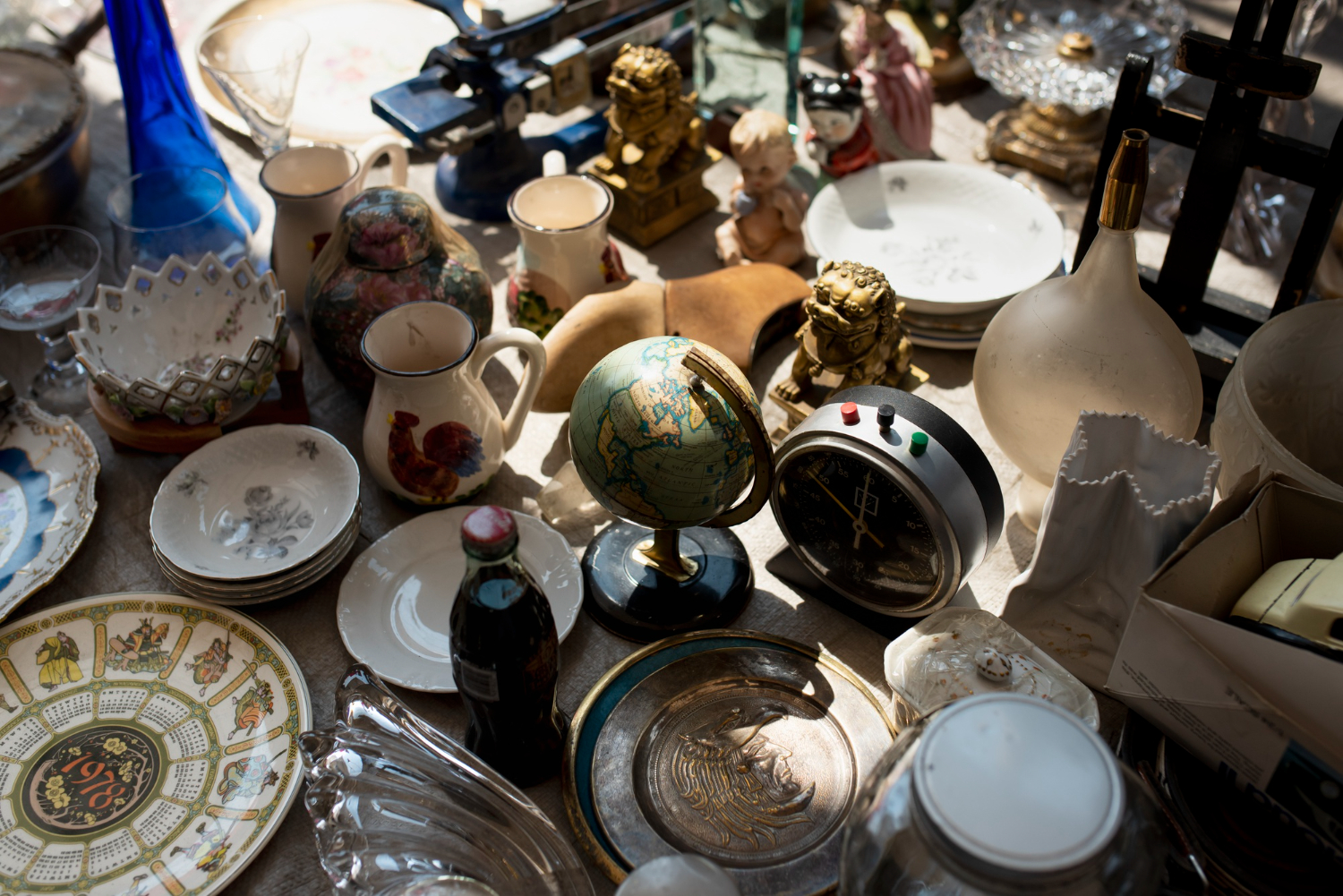
You can often find unique glassware, plates, and serving pieces that add character to your kitchen without matching sets or high prices.
Look for clean, chip-free items. Mixing styles can actually make your table feel more interesting than buying everything new and uniform.
Just avoid anything heavily scratched or damaged.
Hardware and Decorative Details
Handles, knobs, hooks, and small decorative items are easy to overlook—but they can completely change how furniture looks.
Swapping out basic hardware for vintage or unique pieces can make a cheap dresser or cabinet feel custom-made.
These small details are often where flea market finds shine the most.
Things to Look Past (Quick Reality Check)
Not everything is a hidden gem.
Skip anything with:
- Structural damage that can’t be repaired
- Heavy water damage or mold
- Upholstery that smells or feels too worn
- Electrical items that can’t be safely tested
If it feels like a project you’ll never finish, it probably isn’t worth bringing home.
Flea markets aren’t about finding perfect items—they’re about spotting potential.
A scratched table becomes a centerpiece. A worn lamp becomes warm lighting. A random basket becomes part of your storage system.
When you start looking at pieces for what they could be instead of what they are right now, you stop just shopping—and start upgrading your space for very little money.