
Thrift stores are full of furniture that looks promising—until you realize half of it is veneer, particleboard, or a mix of materials designed to look better than they are. The trick isn’t having a trained eye. It’s knowing a few simple checks that quickly separate real solid wood from everything else.
Here’s how to spot solid wood without overthinking it.
Start With the Weight Test
Solid wood furniture is almost always heavier than it looks.
If you try to lift a dresser or table and it feels dense and slightly overbuilt, that’s a good sign. Particleboard and hollow-core pieces tend to feel surprisingly light for their size.
Weight alone isn’t proof—but it’s usually your first clue.
Look at the Edges (This Reveals Everything)
The easiest way to spot fake wood is to check the edges and corners.
Solid wood:
- Grain runs consistently across surfaces
- Corners look like one continuous material
- No layered appearance
Veneer or particleboard:
- You may see thin layers or “sandwich” edges
- Grain pattern may suddenly stop or repeat unnaturally
- Edges are often covered with a thin strip to hide construction
If the edge looks like it’s trying to hide something, it probably is.
Check the Underside and Back Panels
Manufacturers often cut corners where people won’t look.
Flip furniture over or check the back. Solid wood pieces tend to have consistent material throughout. Cheaper furniture often uses thin plywood or fiberboard for hidden sections.
If the inside tells a different story than the outside, trust the inside.
Pay Attention to Joints
How a piece is held together matters more than how it looks.
Solid wood furniture often uses:
- Dovetail joints (interlocking drawer corners)
- Mortise-and-tenon connections
- Screws combined with wood glue
Lower-quality furniture often relies on staples, cam locks, or basic nails.
Good joinery usually means the piece was built to last—not just assembled quickly.
The Scratch Test (Subtle but Useful)
Small, hidden scratches can tell you a lot.
On solid wood, a scratch will show the same material underneath. On veneer, you may see a different layer or even particleboard beneath a thin top surface.
Don’t go damaging items—but a light, existing scuff can actually help you read the material.
Look for Consistency in Grain
Real wood has natural variation.
If the grain pattern looks too perfect or repeats in a printed way across multiple surfaces, it’s likely veneer. Solid wood won’t look identical from one panel to another.
Imperfections, slight color shifts, and variation are actually good signs here.
Drawer Clues Matter More Than You Think
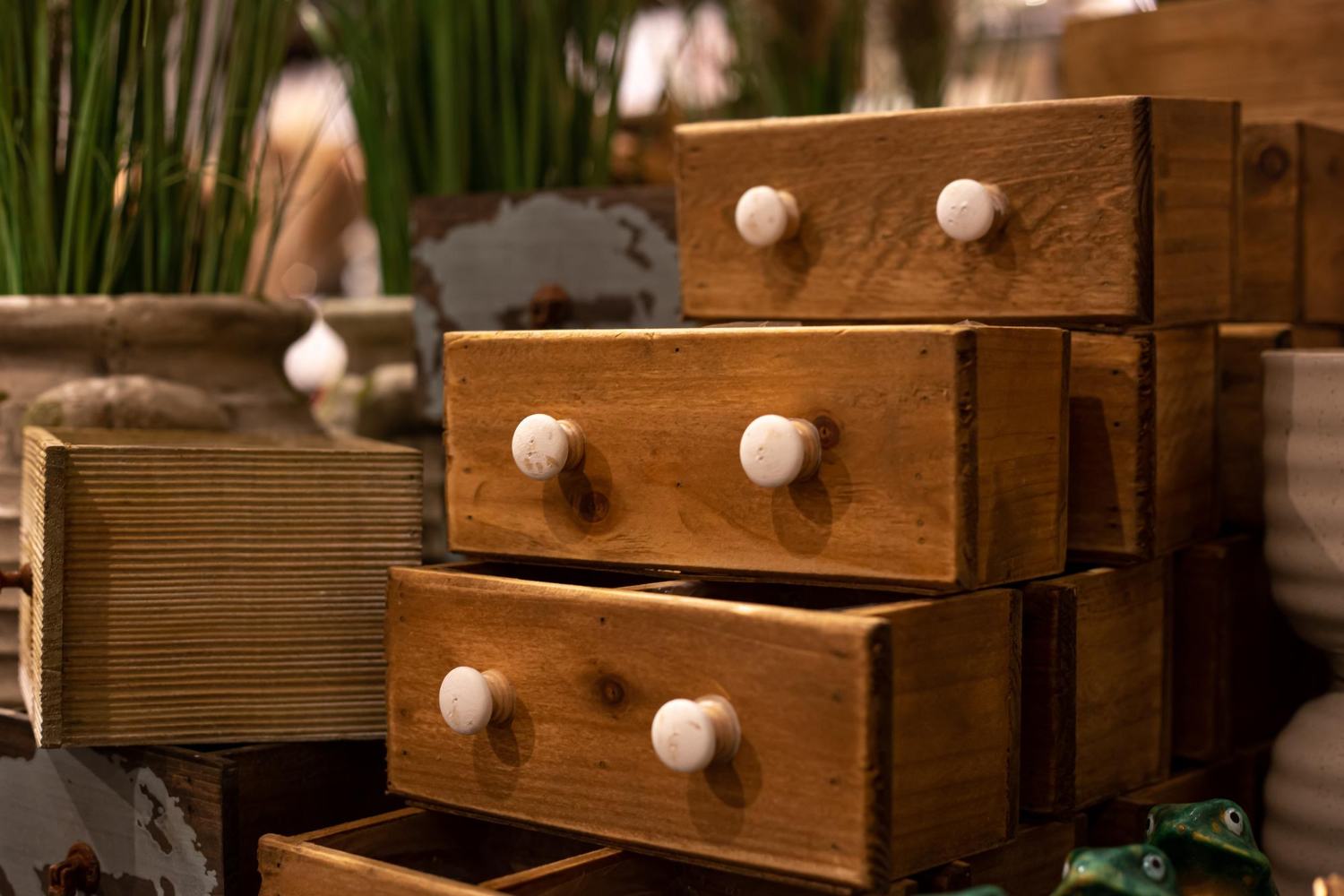
Open drawers and look inside.
Solid wood furniture often has:
- Thicker drawer sides
- Smooth, natural wood interiors
- Strong bottom panels that don’t bow easily
Cheap furniture usually has thin, lightweight drawer construction that flexes under pressure.
Don’t Be Fooled by the Finish
A glossy surface or modern paint job doesn’t mean anything about quality.
Solid wood gets refinished all the time. That shiny top layer might be hiding something great—or something cheap. Always look past the finish.
The “Too Light + Too Perfect” Warning Sign
If a piece looks flawless, lightweight, and very uniform in texture, be skeptical.
Real wood furniture often has small imperfections, variations, or signs of aging. Ironically, those flaws can be a good thing—they usually mean it hasn’t been cheaply manufactured.
Spotting solid wood at thrift prices isn’t about being an expert—it’s about slowing down and paying attention to structure instead of surface.
Weight, edges, joints, and grain will tell you almost everything you need to know. Once you learn to read those clues, you stop guessing—and start consistently finding pieces that are actually worth taking home.